
Merhaba sevgili okuyucularımız.
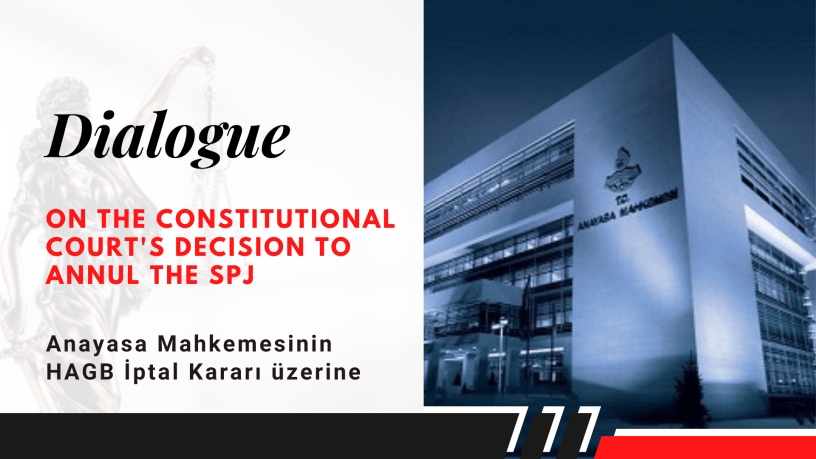
Anayasa Mahkemesi 1/6/2023 tarihinde E.2022/120 numaralı dosyada, 5271 sayılı Ceza Muhakemesi Kanunu’nun 231. maddesine 5560 sayılı Kanun’un 23. maddesiyle eklenen (5) numaralı fıkranın birinci cümlesinin Anayasa’ya aykırı olduğuna ve iptaline, kararın Resmî Gazete’de yayımlanmasından başlayarak bir yıl sonra yürürlüğe girmesine karar vermiştir.
Bu yazımızda Mahkemenin vermiş olduğu bu önemli karara ilişkin iki hukukçunun arasında geçen bir diyalogu bulacaksınız. Metin, bu önemli karara ilişkin Hukuk İngilizcesi terminolojisi ile zenginleştirilmiş olup ayrıca 10 soruluk mini bir test de sizi bekliyor olacak.
Keyifli Çalışmalar Dileriz …
DIALOGUE
Lawyer A: Good morning, Counselor B. Have you had a chance to review the recent press release concerning the Constitutional Court’s decision to annul the provision governing the suspension of the pronouncement of judgment?
Lawyer B: Good morning, Counselor A. Yes, I have. It’s quite a significant development. The Court found the provision unconstitutional and annulled it. That’s going to have some far-reaching consequences.
Lawyer A: Absolutely. Let’s dive into this. The contested provision allowed for the suspension of the pronouncement of judgment for individuals sentenced to a maximum of two years’ imprisonment or a judicial fine. The grounds for annulment were primarily based on the argument that this suspension didn’t adequately remedy the harm to victims, led to impunity, and violated the state’s obligation to protect individuals. What’s your take on these grounds?
Lawyer B: Well, those are serious concerns. The idea that the suspension of judgment doesn’t provide adequate remedies for victims is a valid point. In many cases, it’s the victims who suffer when there’s no swift justice. However, the accused’s right to a fair trial is also crucial, and it seems the provision interfered with this by preventing appeals on points of fact and law if the accused accepted the suspension. That’s a constitutional issue right there.
Lawyer A: You’re right. It’s a delicate balance between the rights of the accused and the rights of victims. Plus, the ambiguity around when confiscation procedures would occur added to the problem. It’s crucial to protect property rights and ensure due process.
Lawyer B: Agreed. And the Court also raised concerns about the suspension not constituting a punishment but rather a threat of punishment. This is a tricky issue, especially in cases of alleged ill-treatment. Victims might feel like justice isn’t served if the accused isn’t properly punished.
Lawyer A: True, and the situation becomes even more complicated when a public official is involved. The Court emphasized that there should be no tolerance for unlawful and serious acts committed by public officials. It’s essential to hold them accountable.
Lawyer B: Exactly. It’s concerning that there wasn’t a clear provision stating that the suspension wouldn’t apply to public officials in cases of torture or ill-treatment during their duties. The Court highlighted that this doesn’t align with the state’s obligation to provide adequate remedies for victims.
Lawyer A: So, in light of all these considerations, the Court declared the provision unconstitutional and annulled it, along with related provisions, and set a one-year grace period for the changes to take effect. What do you think will be the practical implications of this decision?
Lawyer B: Well, it’s going to affect a lot of ongoing and future cases, particularly those involving the suspension of judgment for accused individuals who fall within the specified categories. Courts will need to adjust their procedures, and legislators might have to draft a more comprehensive and balanced provision that addresses the concerns raised by the Constitutional Court.
Lawyer A: Yes, I think we’ll see some intense legal debates and discussions in the coming months regarding how to reconcile the rights of the accused with the rights of victims and the state’s obligations. It’s a challenging task.
Lawyer B: Absolutely, Counselor A. This decision highlights the complexities of constitutional law and the ongoing need to ensure that the legal system evolves in a way that respects the fundamental rights and principles it’s built upon.
Lawyer A: Well said, Counselor B. This is undoubtedly a landmark decision that will shape the legal landscape for years to come. It’ll be fascinating to see how it all unfolds.
Dictionary for Legal English Terminology and Vocabulary
to annul – iptal etmek
provision – hüküm
suspenison of the pronouncement of judgment – hükmün açıklanmasının geri bırakılması
contested provision – itiraza konu hüküm
to sentence imprisonment – hapis ile cezalandırmak
adequately remedy – yeterli giderim
ground – gerekçe
impunity – cezasızlık
what’s your take on … – hakkındaki düşüncen/görüşün nedir?
valid point – geçerli neden
accused – sanık, maznun
right to a fair trial – adil yargılanma hakkı
point of fact – (yazıda) davanın esası
delicate balance – hassas denge
public official – kamu görevlisi
to hold someone accountable – birisini sorumlu tutmak
clear provision – açık/sarih hüküm
grace period – (yazıda) yürürlüğe girme süresi, kanuni süre
in light of all these considerations – bu bilgiler ışığında
legislator – yasa koyucu
to draft – hazırlamak
to address – (yazıda) cevap vermek
to reconcile – bağdaştırmak, uzlaştırmak
landmark decision – (yazıda) emsal karar, çığır açan karar
The multiple-choice cloze test based on the dialogue:
Choose the most appropriate option to fill in the blanks.
- Which sentence did the Constitutional Court annul?
a. The entire paragraph (5)
b. The first sentence of paragraph (5)
c. The last sentence of paragraph (5)
d. The second sentence of paragraph (5) - What is the condition for suspending the pronouncement of judgment according to the contested provision?
a. Up to five years of imprisonment
b. Up to three years of imprisonment
c. Up to two years of imprisonment or a judicial fine
d. Up to one year of imprisonment - What was the primary ground for the request for annulment of the contested provision?
a. It violated the rights of the accused
b. It didn’t provide adequate remedies for victims
c. It didn’t apply to public officials
d. It was too lenient on property owners - The Court’s assessment of the contested provision focused on its compatibility with:
a. Environmental laws
b. Constitutional guarantees relating to fundamental rights and freedoms
c. Tax regulations
d. International trade agreements - What rights are at risk of being violated if an accused accepts the suspension of the pronouncement of judgment?
a. The right to remain silent
b. The right to a fair trial
c. The right to a jury trial
d. The right to legal representation - According to the dialogue, what is the primary concern regarding the timing of confiscation procedures in relation to the suspension of judgment?
a. The procedures are too slow
b. There’s no clear legal provision for when they occur
c. They happen too quickly
d. The accused can appeal them - The decision to suspend the pronouncement of the judgment is seen as:
a. A form of punishment
b. A threat of punishment
c. A guarantee for victims
d. A non-essential legal procedure - In what cases does the Court believe that the suspension of the pronouncement of judgment should not apply?
a. Cases involving public officials
b. Cases involving corporate crimes
c. Cases involving minor offenses
d. Cases involving property disputes - What obligation does the Court emphasize the State has concerning penalties for perpetrators and remedies for victims?
a. The State should be lenient on perpetrators
b. The State should impose the harshest penalties possible
c. The State should provide adequate remedies for victims
d. The State should not interfere in legal matters - How long did the Court give for the annulled provisions to enter into force after the decision was published in the Official Gazette?
a. Immediately
b. After six months
c. After one year
d. After two years
The answers to the multiple-choice cloze test:
- b. The first sentence of paragraph (5)
- c. Up to two years of imprisonment or a judicial fine
- b. It didn’t provide adequate remedies for victims
- b. Constitutional guarantees relating to fundamental rights and freedoms
- b. The right to a fair trial
- b. There’s no clear legal provision for when they occur
- b. A threat of punishment
- a. Cases involving public officials
- c. The State should provide adequate remedies for victims
- c. After one year

FAYDALI OLMASI DİLEKLERİMİZLE
KATKI, GÖRÜŞ, ELEŞTİRİ VE SORULARINIZI BİZE YORUM OLARAK YAZABİLİRSİNİZ.

 Bu eser Creative Commons Atıf-GayriTicari-AynıLisanslaPaylaş 4.0 Uluslararası Lisansı ile lisanslanmıştır.
 HUKUK İNGİLİZCESİ