
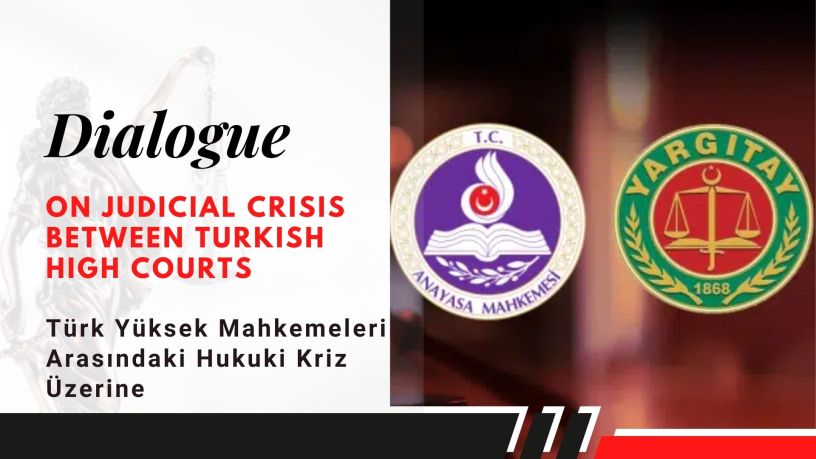
Merhaba Sevgili Okuyucularımız
Bu yazımızda Anayasa Mahkemesi ve Yargıtay arasında yaşanan hukuki gerginliğe ilişkin gelişmeyi Hukuk İngilizcesi terminolojisi bağlamında bir “diyalog” şeklinde ele aldık. Yazının sonunda metinde geçen kelime ve kavramlara ait bir Kelime Listesi ile Test Çalışması sizleri bekliyor olacak.
Keyifli Çalışmalar …
DIALOGUE
Lawyer John: Good day, my Turkish counterpart. I trust you are well. I have come across a rather intriguing news article concerning Turkey’s legal landscape. It appears that the Court of Cassation has taken an unprecedented step by filing a criminal complaint against members of the Constitutional Court. Could you please shed some light on the matter and how it aligns with the Turkish legal framework?
Lawyer Ayşe: Good day to you as well. Certainly, I’d be pleased to provide some insight into this complex situation. The news pertains to a disagreement over the case of imprisoned parliamentarian Can Atalay. The Constitutional Court had, in a recent ruling, ordered his release, citing violations of his rights to security, liberty, and the right to be elected. However, the Court of Cassation has contested this decision, urging lower courts to disregard it and calling for a criminal investigation into the Constitutional Court members who supported the release.
Lawyer John: This is indeed a rare and sensitive situation. I understand that the Court of Cassation alleges a violation of the constitution by the Constitutional Court. How does this align with the Turkish legal system, especially considering the Constitutional Court’s role?
Lawyer Ayşe: The Court of Cassation contends that the Constitutional Court violated the constitution. However, it’s worth noting that legal experts argue that judges of the Constitutional Court can only be tried by the Supreme Criminal Court, which, in this case, is the Constitutional Court itself. This adds a layer of complexity to the situation.
Lawyer John: Intriguing. How is this situation being received by the government and opposition political parties in Turkey?
Lawyer Ayşe: Both the government and opposition parties have expressed concern following the filing of the complaint. The President’s ruling AK Party vice chairman, Hayati Yazici, labeled the event as unprecedented and emphasized the need for state powers to solve problems rather than create them. The main opposition leader, Ozgur Ozel, has gone further, describing it as an attempt to overthrow the constitutional order.
Lawyer John: It seems to be causing quite a stir domestically. Has there been any international reaction or commentary on this legal development?
Lawyer Ayşe: Yes, indeed. The European Commission’s annual report on Turkey’s EU membership bid criticized the country for “serious backsliding” on democratic standards, the rule of law, human rights, and judicial independence. This external perspective adds another dimension to the gravity of the situation.
Lawyer John: Fascinating. Now, turning to the Turkish Constitution, specifically Article 153/6, which states that decisions of the Constitutional Court shall be binding on various organs and entities. How does this article come into play in this context?
Lawyer Ayşe: Article 153/6 establishes the binding nature of decisions made by the Constitutional Court on legislative, executive, and judicial organs, administrative authorities, as well as individuals and corporate bodies. The Court of Cassation’s challenge seems to contest the authority of the Constitutional Court’s decision in the case of Can Atalay, bringing into question the adherence to this constitutional provision.
Lawyer John: It appears that this legal development has far-reaching implications. How do you foresee this situation unfolding within the Turkish legal system?
Lawyer Ayşe: Given the complexities involved, it is challenging to predict the exact trajectory. However, the legal community is closely monitoring the developments, and it will be interesting to see how the Constitutional Court responds to the criminal complaint filed against its members. The adherence to constitutional principles and the rule of law will undoubtedly be crucial in resolving this unprecedented situation.
Lawyer John: Thank you for providing such a comprehensive overview. It’s clear that this legal development raises significant questions about the rule of law in Turkey. I appreciate your insights.
Lawyer Ayşe: You’re most welcome. Should you have any further inquiries or require additional information, feel free to reach out. Legal developments of this nature demand thorough examination and understanding.
VOCABULARY LIST
- unprecedented – eşi benzeri görülmemiş
- criminal complaint – suç şikayeti
- Constitutional Court – Anayasa Mahkemesi
- disagreement – anlaşmazlık
- court document – mahkeme belgesi
- imprisonment – hapis cezası
- violate rights – hakları ihlal etmek
- security – güvenlik
- liberty – özgürlük
- right to be elected – seçilme hakkı
- Court of Cassation – Yargıtay
- unusual decision – olağandışı karar
- criminal investigation – suç soruşturması
- legal experts – hukuk uzmanları
- Supreme Criminal Court – Yüce Ceza Mahkemesi
- government – hükümet
- opposition political parties – muhalefet siyasi partileri
- Constitutional Crisis – Anayasa Krizi
- ruling – hüküm
- overthrow – devirmek
- constitutional order – anayasa düzeni
- legal crisis – hukuki kriz
- law professor – hukuk profesörü
- democratic standards – demokratik standartlar
- rule of law – hukukun üstünlüğü
- human rights – insan hakları
- judicial independence – yargı bağımsızlığı
- Official Gazette – Resmi Gazete
- binding – bağlayıcı
- legislative – yasama
- executive – yürütme
- judicial organs – yargı organları
- administrative authorities – idari makamlar
- persons and corporate bodies – bireyler ve kurumsal varlıklar
- legal framework – hukuki çerçeve
- domestic – iç
- international – uluslararası
- trajectory – gelişme yolu
- adherence – bağlılık
- constitutional principles – anayasal prensipler
TEST
1. What did the Constitutional Court rule in the case of Can Atalay?
a) His imprisonment was lawful.
b) His imprisonment violated his rights.
c) The Court of Cassation had the final say.
d) His release was unnecessary.
2. According to the legal experts, who can try judges of the Constitutional Court?
a) Court of Cassation
b) Constitutional Court
c) Supreme Criminal Court
d) European Commission
3. How did President Tayyip Erdogan’s ruling AK Party vice chairman describe the event?
a) Expected
b) Unprecedented
c) Insignificant
d) Routine
4. What is the main concern of the main opposition leader, Ozgur Ozel?
a) Constitutional amendments
b) Overthrowing the government
c) Violation of human rights
d) Attempt at overthrowing the constitutional order
5. According to the European Commission’s annual report, what did it criticize about Turkey’s EU membership bid?
a) Economic policies
b) Backsliding on democratic standards
c) Foreign relations
d) Educational reforms
6. What does the term “unprecedented” mean in the context of the news text?
a) Frequent
b) Uncommon
c) Routine
d) Unusual
7. In legal terms, what does “criminal investigation” refer to?
a) Civil dispute resolution
b) Inquiry into potential criminal activities
c) Administrative review
d) Constitutional interpretation
8. What is the Turkish equivalent of “Constitutional Court”?
a) Mahkeme Belgesi
b) Anayasa Mahkemesi
c) Yargıtay
d) Hükümet Mahkemesi
9. How would you translate “violate rights” into Turkish?
a) Hakları İhlal Etmek
b) Hakları Onaylamak
c) Hakları Korumak
d) Hakları Savunmak
10. What is the meaning of “democratic standards” in the vocabulary list?
a) Standards of politeness
b) Criteria for democracy
c) Voting procedures
d) Election campaigns
11. According to the Turkish Constitution, where should decisions of the Constitutional Court be published immediately?
a) Social media platforms
b) European Commission’s report
c) Official Gazette
d) Court of Cassation’s records
12. In the legal context, what does “binding” mean as per the Constitutional Court’s decisions?
a) Optional
b) Advisable
c) Compulsory
d) Temporary
13. Which term refers to a person’s right to be elected, as mentioned in the news text?
a) Security
b) Liberty
c) Right to Overthrow
d) Right to be Elected
14. What did the Court of Cassation allege against the Constitutional Court in the news text?
a) Violation of the constitution
b) Proper legal procedures
c) Unbiased decision-making
d) Adequate representation
15. How is “ruling” defined in the legal context of the news text?
a) Administrative decision
b) Constitutional interpretation
c) Legal decree
d) Court judgment
16. In the Turkish legal system, what organ can try judges of the Constitutional Court?
a) European Court of Justice
b) Court of Appeals
c) Supreme Criminal Court
d) Constitutional Tribunal
17. According to Article 153/6 of the Turkish Constitution, who is bound by decisions of the Constitutional Court?
a) Only legislative organs
b) Only executive organs
c) Legislative, executive, and judicial organs, administrative authorities, and individuals
d) Only administrative authorities
18. What term is used for the act of trying to overthrow the government, as mentioned in the news text?
a) Rebellion
b) Sedition
c) Coup d’état
d) Overthrowing
19. How does the news text describe the Court of Cassation’s decision regarding Can Atalay’s release?
a) Routine
b) Expected
c) Unusual
d) Necessary
20. According to the news text, which term characterizes the European Commission’s view on Turkey’s democratic standards?
a) Praise
b) Criticism
c) Support
d) Approval
Answers
- b) His imprisonment violated his rights.
- c) Supreme Criminal Court
- b) Unprecedented
- d) Attempt at overthrowing the constitutional order
- b) Backsliding on democratic standards
- d) Unusual
- b) Inquiry into potential criminal activities
- b) Anayasa Mahkemesi
- a) Hakları İhlal Etmek
- b) Criteria for democracy
- c) Official Gazette
- c) Compulsory
- d) Right to be Elected
- a) Violation of the constitution
- d) Court judgment
- c) Supreme Criminal Court
- c) Legislative, executive, and judicial organs, administrative authorities, and individuals
- c) Coup d’état
- c) Unusual
- b) Criticism

FAYDALI OLMASI DİLEKLERİMİZLE
KATKI, GÖRÜŞ, ELEŞTİRİ VE SORULARINIZI BİZE YORUM OLARAK YAZABİLİRSİNİZ.

 Bu eser Creative Commons Atıf-GayriTicari-AynıLisanslaPaylaş 4.0 Uluslararası Lisansı ile lisanslanmıştır.
 HUKUK İNGİLİZCESİ