
Merhaba sevgili okuyucularımız
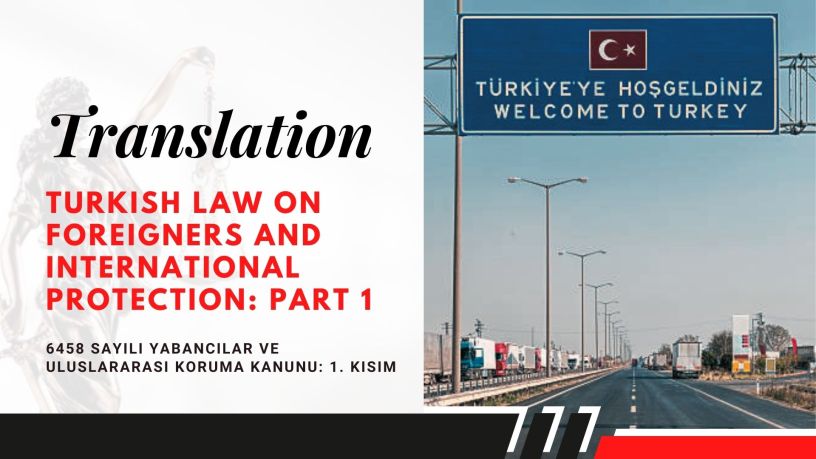
Bu yazımızda 6458 sayılı Yabancılar ve Uluslararası Koruma Kanununun “Amaç, Kapsam, Tanımlar ve Geri Gönderme Yasağı” başlıklı Birinci Kısmına ait Hukuk İngilizcesi bağlamındaki çevirisine yer veriyoruz. Yazı sonunda kapsamlı bir test çalışması ile öğrendiğiniz tanımları pekiştirme fırsatı bulacaksınız.
Keyifli çalışmalar dileriz …
TURKISH LAW ON FOREIGNERS AND INTERNATIONAL PROTECTION
6458 sayılı YABANCILAR VE ULUSLARARASI KORUMA KANUNU
| English Text | Türkçe Metin |
| PART ONE – PURPOSE, SCOPE, DEFINITIONS, AND NON-REFOULEMENT | BİRİNCİ KISIM – Amaç, Kapsam, Tanımlar ve Geri Gönderme Yasağı |
| SECTION ONE – Purpose, Scope, and Definitions | BİRİNCİ BÖLÜM – Amaç, Kapsam ve Tanımlar |
| ARTICLE 1 – Purpose | MADDE 1 – Amaç |
| (1) The purpose of this Law is to regulate the principles and procedures regarding foreigners’ entry into, stay in, and exit from Turkey, and the scope and implementation of the protection to be provided for foreigners seeking protection in Turkey. | (1) Bu Kanunun amacı; yabancıların Türkiye’ye girişleri, Türkiye’de kalışları ve Türkiye’den çıkışları ile Türkiye’den koruma talep eden yabancılara sağlanacak korumanın kapsamına ve uygulanmasına ilişkin usul ve esasları düzenlemektir. |
| ARTICLE 2 – Scope | MADDE 2 – Kapsam |
| (1) The provisions of this Law apply to activities and actions related to foreigners; the international protection for individual protection claims at borders, border gates, or within Turkey; and immediate temporary protection for large-scale influxes of foreigners who cannot return to their country of origin. | (1) Bu Kanun, yabancılarla ilgili iş ve işlemleri; sınırlarda, sınır kapılarında ya da Türkiye içinde yabancıların münferit koruma talepleri üzerine sağlanacak uluslararası korumayı, ayrılmaya zorlandıkları ülkeye geri dönemeyen ve kitlesel olarak Türkiye’ye gelen yabancılara acil olarak sağlanacak geçici korumayı kapsar. |
| (2) This Law shall be implemented without prejudice to provisions of international agreements to which Turkey is a party and specific laws. | (2) Bu Kanunun uygulanmasında, Türkiye’nin taraf olduğu milletlerarası anlaşmalar ile özel kanunlardaki hükümler saklıdır. |
| ARTICLE 3 – Definitions | MADDE 3 – Tanımlar |
| (1) In implementation of this Law, the following definitions shall apply: | (1) Bu Kanunun uygulanmasında aşağıdaki tanımlar geçerlidir: |
| a) Family members: the spouse, minor child, and dependent adult child of the applicant or beneficiary of international protection. | a) Aile üyeleri: Başvuru sahibinin veya uluslararası koruma statüsü sahibi kişinin eşini, ergin olmayan çocuğu ile bağımlı ergin çocuğunu, |
| b) European Countries: Member States of the Council of Europe and other countries to be determined by the President. | b) Avrupa ülkeleri: Avrupa Konseyi üyesi olan ülkeler ile Cumhurbaşkanınca belirlenecek diğer ülkeleri, |
| c) Minister: the Minister of Interior. | c) Bakan: İçişleri Bakanını, |
| ç) Ministry: the Ministry of Interior. | ç) Bakanlık: İçişleri Bakanlığını, |
| d) Applicant: a person who has made an international protection claim and whose application is still pending a final decision. | d) Başvuru sahibi: Uluslararası koruma talebinde bulunan ve henüz başvurusu hakkında son karar verilmemiş olan kişiyi |
| e) Child: a person who is under the age of 18 and has not yet attained majority. | e) Çocuk: Henüz on sekiz yaşını doldurmamış ve ergin olmamış kişiyi, |
| f) Sponsor: a Turkish citizen or a foreigner legally staying in Turkey who undertakes the expenses of foreigners coming to Turkey for family reunification and who is referenced as the supporter in the residence permit application. | f) Destekleyici: Aile birliği amacıyla Türkiye’ye gelecek yabancıların masraflarını üstlenen ve ikamet izni talebinde bulunanlar tarafından başvuruya dayanak gösterilen Türk vatandaşını veya Türkiye’de yasal olarak bulunan yabancıyı, |
| g) Director General: the Director General of Migration Management. | g) Genel Müdür: Göç İdaresi Genel Müdürünü, |
| ğ) Directorate General: the Directorate General of Migration Management. | ğ) Genel Müdürlük: Göç İdaresi Genel Müdürlüğünü, |
| h) Entry and exit controls: the controls carried out at border gates. | h) Giriş ve çıkış kontrolü: Sınır kapılarındaki kontrol işlemlerini, |
| ı) Migration: regular migration involving the lawful entry into, stay in, or exit from Turkey; irregular migration involving unlawful entry, stay, or exit; unauthorized employment in Turkey; and international protection. | ı) Göç: Yabancıların, yasal yollarla Türkiye’ye girişini, Türkiye’de kalışını ve Türkiye’den çıkışını ifade eden düzenli göç ile yabancıların yasa dışı yollarla Türkiye’ye girişini, Türkiye’de kalışını, Türkiye’den çıkışını ve Türkiye’de izinsiz çalışmasını ifade eden düzensiz göçü ve uluslararası korumayı, |
| i) Residential address: the domicile recorded in Turkey in the address-based registration system. | i) İkamet adresi: Türkiye’de adres kayıt sisteminde kayıtlı olunan yeri, |
| j) Residence permit: the permit issued for the purpose of staying in Turkey. | j) İkamet izni: Türkiye’de kalmak üzere verilen izin belgesini, |
| k) Consulate: the consulate generals, consulates, or the embassy consular offices of the Republic of Turkey. | |
| k) Konsolosluk: Türkiye Cumhuriyeti başkonsolosluklarını, konsolosluklarını veya büyükelçilik konsolosluk şubelerini, | l) Özel ihtiyaç sahibi: Başvuru sahibi ile uluslararası koruma statüsü sahibi kişilerden; refakatsiz çocuk, engelli, yaşlı, hamile, beraberinde çocuğu olan yalnız anne ya da baba veya işkence, cinsel saldırı ya da diğer ciddi psikolojik, bedensel ya da cinsel şiddete maruz kalmış kişiyi, |
| m) Unaccompanied minor: a child who arrives in Turkey without the attendance of an adult who by law or custom is responsible, or who is left unaccompanied after entry, unless taken under the care of a responsible person. | m) Refakatsiz çocuk: Sorumlu bir kişinin etkin bakımına alınmadığı sürece, kanunen ya da örf ve adet gereği kendisinden sorumlu bir yetişkinin refakati bulunmaksızın Türkiye’ye gelen veya Türkiye’ye giriş yaptıktan sonra refakatsiz kalan çocuğu, |
| n) Travel document: a document substituting a passport. | n) Seyahat belgesi: Pasaport yerine geçen belgeyi, |
| o) Border gates: the border crossing points designated by a Presidential Decree for entry into and exit from Turkey. | o) Sınır kapısı: Cumhurbaşkanı kararıyla Türkiye’ye giriş ve Türkiye’den çıkış için belirlenen sınır geçiş noktasını, |
| ö) Final decision: a decision regarding an applicant’s claim or a beneficiary’s status; includes Directorate General decisions unchallenged through administrative or judicial review, or judicial decisions no longer subject to appeal. | ö) Son karar: Başvuru sahibinin başvurusuyla veya uluslararası koruma statüsü sahibi kişinin statüsüyle ilgili kararlardan; idari itirazda bulunulmaması ve yargıya başvurulmaması hâlinde Genel Müdürlük tarafından verilen kararı veya yargıya başvurulması sonucunda temyiz edilmesi mümkün olmayan kararı, |
| p) Convention: the 28 July 1951 Convention Relating to the Status of Refugees as amended by the 1967 Protocol. | p) Sözleşme: Mültecilerin Hukuki Durumuna Dair 1967 Protokolüyle değişik 28/7/1951 tarihli Mültecilerin Hukuki Durumuna Dair Sözleşmeyi, |
| r) International protection: the status granted for refugee, conditional refugee, and subsidiary protection. | r) Uluslararası koruma: Mülteci, şartlı mülteci veya ikincil koruma statüsünü, |
| s) Country of citizenship: the country of which the foreigner holds citizenship, or in cases of multiple citizenships, each such country. | s) Vatandaşı olduğu ülke: Yabancının vatandaşı olduğu ülkeyi veya yabancının birden fazla vatandaşlığının bulunduğu durumlarda, vatandaşlığında olduğu ülkelerden her birini, |
| ş) Stateless person: a person who does not hold citizenship of any state and is considered a foreigner. | ş) Vatansız kişi: Hiçbir devlete vatandaşlık bağıyla bağlı bulunmayan ve yabancı sayılan kişiyi, |
| t) Visa: a permit allowing a stay of up to 90 days in Turkey or transit through Turkey. | t) Vize: Türkiye’de en fazla doksan güne kadar kalma hakkı tanıyan ya da transit geçişi sağlayan izni, |
| u) Visa exemption: the regulation waiving the visa requirement. | u) Vize muafiyeti: Vize alma gerekliliğini kaldıran düzenlemeyi, |
| ü) Foreigner: a person who does not hold a citizenship bond with the Republic of Turkey. | ü) Yabancı: Türkiye Cumhuriyeti Devleti ile vatandaşlık bağı bulunmayan kişiyi, |
| v) Foreigner identification number: the identification number issued to foreigners under the Population Services Law № 5490 of 25 April 2006. | v) Yabancı kimlik numarası: 25/4/2006 tarihli ve 5490 sayılı Nüfus Hizmetleri Kanunu uyarınca yabancılara verilen kimlik numarasını, |
| y) Authorized intermediary: an institution or organization, determined by regulation and authorized by the Directorate General. | y) Yetkili aracı kurum: Nitelikleri ve görev çerçevesi yönetmelikle belirlenen ve Genel Müdürlük tarafından yetkilendirilen kurum veya kuruluşu, |
| z) Inadmissible passenger: a person arriving at border gates for entry or transit who is denied entry or transit for failing to meet legal requirements. | z) Kabul edilemeyen yolcu: Ülkeye giriş yapabilmek veya ülkeden transit geçebilmek için sınır kapılarına gelen ancak mevzuatta aranan koşulları taşımadığından ülkeye girişine veya ülkeden transit geçişine izin verilmeyen kişiyi, |
| aa) Carrier: the owner or operator of vehicles transporting foreign passengers by land, air, sea, or rail. | aa) Taşıyıcı: Yabancı uyruklu yolcuları taşıyan kara, hava, deniz ve demiryolu taşıtlarının gerçek veya tüzel kişi olan sahiplerini veya ticari kara, hava, deniz ve demiryolu işletmecilerini, |
| SECTION TWO – Non-refoulement | İKİNCİ BÖLÜM – Geri Gönderme Yasağı |
| ARTICLE 4 – Non-refoulement | MADDE 4 – Geri Gönderme Yasağı |
| (1) No one within the scope of this Law shall be returned to a place where they may be subjected to torture, inhuman or degrading punishment or treatment, or where their life or freedom would be threatened due to their race, religion, nationality, membership in a particular social group, or political opinion. | (1) Bu Kanun kapsamındaki hiç kimse, işkenceye, insanlık dışı ya da onur kırıcı ceza veya muameleye tabi tutulacağı veya ırkı, dini, tabiiyeti, belli bir toplumsal gruba mensubiyeti veya siyasi fikirleri dolayısıyla hayatının veya hürriyetinin tehdit altında bulunacağı bir yere gönderilemez. |
Advanced Legal English and International Law Test
Section 1: Multiple Choice Questions
(Choose the most appropriate option for each question.)
- Which of the following best defines “non-refoulement” as per Article 4?
a) The principle allowing the removal of foreigners under any circumstances.
b) A legal concept ensuring that individuals are not deported to places where they face threats to life or freedom.
c) A discretionary policy of states to grant or deny asylum.
d) A procedural safeguard against legal prosecution in a host country. - The term “irregular migration” as mentioned in Article 3 (1)(ı) includes:
a) Lawful entry into a country.
b) Unauthorized employment in a host country.
c) Applications for international protection.
d) Regular border controls. - According to Article 2(2), international agreements to which Turkey is a party:
a) Are secondary to the provisions of this Law.
b) Override this Law entirely.
c) Are to be harmonized with the specific provisions of this Law.
d) Remain unaffected and take precedence over conflicting domestic provisions.
Section 2: True/False Statements
(State whether the following statements are true or false. Provide brief reasoning for your answers.)
- Family members, as defined in Article 3(1)(a), include parents of the applicant.
- Temporary protection is applicable only to individuals who enter Turkey via regular migration channels.
Section 3: Short Answer Questions
(Answer in concise, well-structured sentences.)
- Define the role of the “sponsor” as mentioned in Article 3(1)(f). What responsibilities do they bear under Turkish Law?
- Explain the significance of the phrase “without prejudice to provisions of international agreements” in Article 2(2).
- Discuss how the principle of “non-refoulement” contributes to the broader framework of international human rights law.
Section 4: Legal Case Analysis
(Analyze the case scenario and answer the questions.)
Case:
A foreign national, X, seeks international protection in Turkey, claiming persecution based on political opinions in their home country. During the application process, it is discovered that X entered Turkey using falsified documents and is employed without authorization.
- Under the definitions provided in Article 3, classify X’s migration status. Provide justification based on the law.
- In light of the non-refoulement principle in Article 4, can X be deported back to their home country if evidence confirms their claims of political persecution? Explain with reference to international law principles.
Section 5: Drafting Exercise
(Demonstrate advanced legal drafting skills.)
- Draft a brief legal memorandum arguing for the implementation of the non-refoulement principle in the case of large-scale forced migration due to environmental disasters. Include relevant legal reasoning and references to international law.
Answers for the First Five Questions
- Which of the following best defines “non-refoulement” as per Article 4?
Answer: b) A legal concept ensuring that individuals are not deported to places where they face threats to life or freedom.- Explanation: The non-refoulement principle explicitly prohibits returning individuals to places where they may face persecution or inhuman treatment, as outlined in Article 4.
- The term “irregular migration” as mentioned in Article 3 (1)(ı) includes:
Answer: b) Unauthorized employment in a host country.- Explanation: Irregular migration encompasses unlawful entry, stay, or work in a host country, alongside illegal departure.
- According to Article 2(2), international agreements to which Turkey is a party:
Answer: d) Remain unaffected and take precedence over conflicting domestic provisions.- Explanation: Article 2(2) ensures that the application of this Law does not undermine international obligations, giving primacy to international agreements.
- Family members, as defined in Article 3(1)(a), include parents of the applicant.
Answer:False- Explanation: The definition of “family members” is limited to the spouse, minor children, and dependent adult children of the applicant. Parents are not included.
- Temporary protection is applicable only to individuals who enter Turkey via regular migration channels.
Answer:False- Explanation: Temporary protection applies in situations of mass influx, regardless of whether the individuals entered through regular or irregular channels, provided they meet the eligibility criteria.
- Define the role of the “sponsor” as mentioned in Article 3(1)(f). What responsibilities do they bear under Turkish Law?
- The sponsor, as defined in Article 3(1)(f), is a Turkish citizen or a foreigner legally residing in Turkey who undertakes the financial responsibilities of foreigners arriving for family reunification purposes. They serve as a guarantor in the residence permit application process.
- Explain the significance of the phrase “without prejudice to provisions of international agreements” in Article 2(2).
- This phrase ensures that international agreements Turkey is a party to, such as human rights treaties, take precedence and remain binding, even if certain provisions of domestic law conflict with these agreements.
- Discuss how the principle of “non-refoulement” contributes to the broader framework of international human rights law.
- Non-refoulement, a cornerstone of refugee and human rights law, ensures that no individual is returned to a place where they risk torture, inhuman treatment, or threats to life and liberty. It reinforces global commitments to protecting fundamental human rights as outlined in treaties like the 1951 Refugee Convention and its 1967 Protocol.

FAYDALI OLMASI DİLEKLERİMİZLE
KATKI, GÖRÜŞ, ELEŞTİRİ VE SORULARINIZI BİZE YORUM OLARAK YAZABİLİRSİNİZ.

 Bu eser Creative Commons Atıf-GayriTicari-AynıLisanslaPaylaş 4.0 Uluslararası Lisansı ile lisanslanmıştır.
 HUKUK İNGİLİZCESİ