
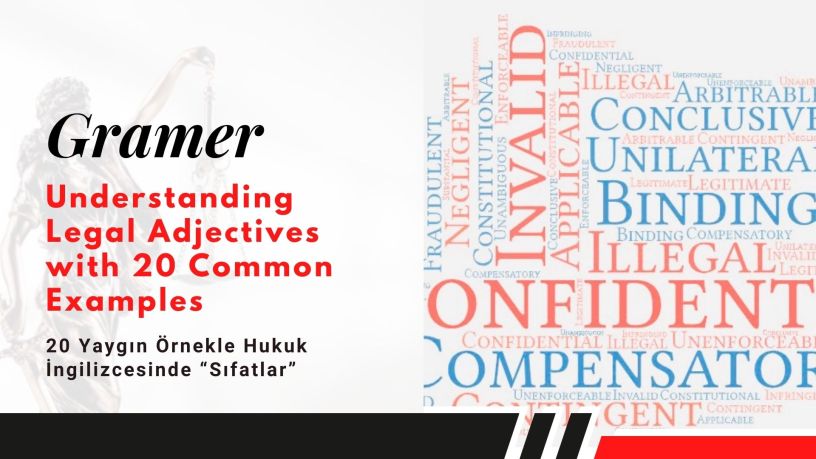
Sıfatlar, Hukuk İngilizcesinin önemli bir parçasıdır. İddianın niteliği, dahil olan taraflar ve konunun yasal durumu dahil olmak üzere bir davanın veya yasal belgenin çeşitli yönlerini açıklamak için kullanılırlar. Bu yazıda, 20 yaygın Hukuk İngilizcesi sıfatını, anlamlarını ve yasal bağlamlarda nasıl kullanıldıklarına dair örnekleri inceleyeceğiz. Yazının sonunda ufak bir metin ve alıştırma da sizleri bekliyor. Keyifli okumalar !
Adjectives are an essential part of legal English. They are used to describe various aspects of a case or legal document, including the nature of the claim, the parties involved, and the legal status of the matter. In this post, we will explore 20 common legal adjectives, their meanings, and examples of how they are used in legal contexts.

- Confidential – This adjective is used to describe information that is kept secret or private. For example, “The company’s financial statements are confidential and cannot be shared with third parties.” (Gizli, mahrem)
- Fraudulent – This adjective is used to describe actions or behavior that is deceptive, dishonest, or criminal. For example, “The plaintiff claims that the defendant made fraudulent misrepresentations about the product’s safety.” (Dolandırıcı, sahtekar)
- Invalid – This adjective is used to describe something that is not legally binding or enforceable. For example, “The contract is invalid because it was signed under duress.” (Geçersiz)
- Applicable – This adjective is used to describe a law or rule that is relevant or appropriate to a specific situation. For example, “The applicable law in this case is Turkish law.” (Uygulanabilir)
- Legitimate – This adjective is used to describe something that is lawful, authorized, or reasonable. For example, “The company has a legitimate business interest in protecting its trade secrets.” (Geçerli, meşru)
- Compensatory – This adjective is used to describe damages or awards that are intended to compensate someone for losses or harm. For example, “The plaintiff is seeking compensatory damages for lost wages and medical expenses.” (Tazminat amaçlı)
- Binding – This adjective is used to describe an agreement or decision that is legally enforceable. For example, “The parties entered into a binding contract that requires them to arbitrate any disputes.” (Bağlayıcı)
- Contingent – This adjective is used to describe something that depends on certain conditions or circumstances. For example, “The defendant’s liability is contingent on whether the plaintiff can prove negligence.” (Şartlı, Muhtemel)
- Conclusive – This adjective is used to describe evidence or arguments that are convincing or decisive. For example, “The DNA test results were conclusive and proved the defendant’s guilt.” (Kesin, Kati, Kanıtlayıcı)
- Unilateral – This adjective is used to describe an action or decision that is taken by one party without consulting or seeking approval from others. For example, “The employer’s unilateral decision to change the employee’s job duties constituted a breach of contract.” (Tek taraflı)
- Constitutional – This adjective is used to describe something that is in accordance with the constitution or fundamental law of a country. For example, “The court held that the statute was constitutional and did not violate the defendant’s rights.” (Anayasal)
- Illegal – This adjective is used to describe actions or behavior that are prohibited by law. For example, “The defendant’s illegal possession of a firearm resulted in criminal charges.” (Yasadışı)
- Arbitrable – This adjective is used to describe disputes that can be resolved through arbitration rather than through the courts. For example, “The parties agreed that any disputes arising from the contract would be subject to binding arbitration.” (Tahkim edilebilir)
- Damaging – This adjective is used to describe actions or behavior that cause harm or injury to someone else. For example, “The defendant’s reckless driving caused a damaging collision.” (Zarar verici)
- Enforceable – This adjective is used to describe an agreement or contract that can be legally enforced. For example, “The court held that the non-compete agreement was enforceable and restricted the employee from working for a competitor.” (Yürütülebilir, icra/infaz edilebilir)
- Infringing – This adjective is used to describe actions or behavior that violate someone else’s rights, such as intellectual property rights. For example, “The defendant’s use of the plaintiff’s trademark without permission constituted infringing activity.” (İhlal, Hakları çiğneyen)
- Negligent – This adjective is used to describe actions or behavior that are careless or reckless and result in harm to someone else. For example, “The defendant’s failure to maintain the premises in a safe condition was a negligent act.” (Taksirli, Kusurlu, İhmalkar)
- Substantial – This adjective is used to describe something that is significant or considerable in amount or degree. For example, “The plaintiff is seeking a substantial amount of damages for lost profits and reputation.” (Önemli, büyük)
- Unambiguous – This adjective is used to describe language or terms that are clear and not subject to interpretation. For example, “The contract terms were unambiguous and clearly stated the parties’ obligations.” (Açık, sarih, belirsizlik olmayan)
- Unenforceable – This adjective is used to describe an agreement or contract that cannot be legally enforced due to various reasons such as lack of consideration or illegality. For example, “The court held that the contract was unenforceable because it lacked a lawful purpose.” (İcra edilemez, Yürütülemez, Uygulanamaz)
In conclusion, adjectives play an important role in legal language, and their use can significantly impact the meaning and interpretation of a legal document or case. Understanding legal adjectives and their meanings can help lawyers and legal professionals to communicate more effectively and accurately.
Below is an example text that uses 20 legal adjectives to help you become more familiar with these terms:
In order for a contract to be valid and enforceable, it must be binding and enforceable by law. Any clauses that are unambiguous and applicable to the agreement must be included. It is important that the terms of the contract are not fraudulent or infringing on any constitutional rights.
If one party breaches the contract, they may be liable for compensatory damages to the other party. The amount of damages awarded will depend on the extent of the damages caused. It is important to note that the damages awarded may be substantial in cases where the breach was particularly damaging.
The terms of the contract must be conclusive and not contingent on any future events or circumstances. If the contract contains any unilateral clauses, they must be carefully worded to avoid being deemed invalid or unenforceable.
In cases where disputes arise, it is often preferable to resolve them through arbitration. However, it is important to ensure that any arbitration clauses are not illegal or unconstitutional.
It is important for parties to keep all information confidential in order to avoid any damaging disclosures. Breaches of confidentiality may be considered negligent and lead to substantial damages.
Now, here’s an exercise to test your understanding of these legal adjectives:
Fill in the blank with the correct legal adjective:
- The contract was deemed __________ due to a mistake in its formation.
- The confidentiality clause in the contract is __________.
- The evidence presented was __________ and used to support the plaintiff’s case.
- The defendant’s conduct was found to be __________ and caused harm to the plaintiff.
- The damages awarded to the plaintiff were __________ and reflected the extent of the harm caused.
- The arbitration clause in the contract is __________ and will be followed in case of a dispute.
- The defendant’s conduct was __________ on the plaintiff’s constitutional rights.
- The contract contains several __________ clauses that may be deemed unenforceable.
- The evidence presented was __________ to the case and played a significant role in the court’s decision.
- The defendant’s offer to settle the case for a __________ amount was rejected by the plaintiff.
Answers:
- Invalid
- Confidential
- Conclusive
- Damaging
- Substantial
- Arbitrable
- Infringing
- Contingent
- Applicable
- Legitimate
Great job! Let’s continue with a few more practice questions:
- The plaintiff’s claim was found to be __________ and not supported by the evidence presented.
- The defendant’s conduct was __________ and violated the terms of the contract.
- The contract was __________ because it lacked the necessary elements to make it legally binding.
- The plaintiff’s argument was __________ and not based on relevant legal precedent.
- The defendant’s actions were deemed __________ because they were done without the other party’s consent.
- The terms of the contract were __________ and could not be reasonably interpreted in any other way.
- The defendant’s conduct was __________ because they acted in bad faith and with intent to deceive.
- The damages awarded to the plaintiff were __________ because the defendant’s conduct was particularly egregious.
- The plaintiff’s claim was found to be __________ because it was filed after the statute of limitations had expired.
- The contract contains a __________ clause, which means that both parties must perform their obligations in good faith.
Answers: 11. Invalid
- Unilateral
- Unenforceable
- Inapplicable
- Unilateral
- Unambiguous
- Fraudulent
- Punitive
- Time-barred
- Binding
Congratulations, you have now become more familiar with 20 legal adjectives commonly used in legal language. Keep practicing and reviewing these terms, and you will be well on your way to understanding legal language more easily.

FAYDALI OLMASI DİLEKLERİMİZLE
KATKI, GÖRÜŞ, ELEŞTİRİ VE SORULARINIZI BİZE YORUM OLARAK YAZABİLİRSİNİZ.

 Bu eser Creative Commons Atıf-GayriTicari-AynıLisanslaPaylaş 4.0 Uluslararası Lisansı ile lisanslanmıştır.
 HUKUK İNGİLİZCESİ