
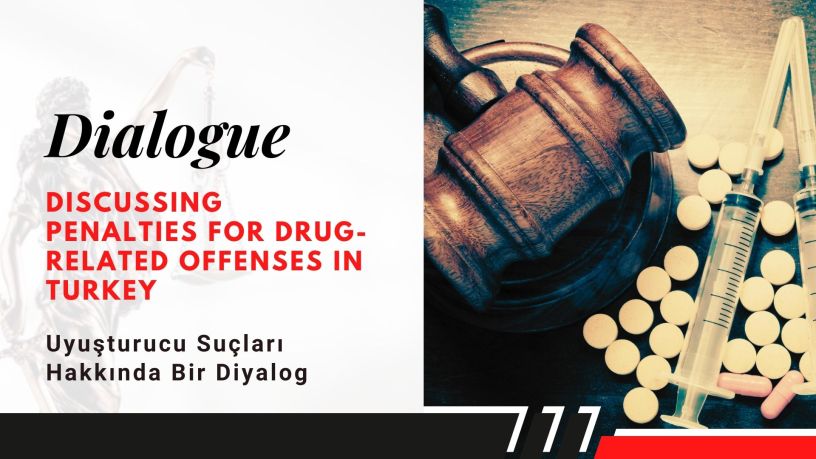
Bu yazımızda Türk Ceza Kanunu 188 inci maddesi kapsamında Hukuk İngilizcesi terminolojisi kullanılarak Bir Türk Hukukçusu ile Türk olmayan bir hukukçu arasında ilgili hükmün tartışıldığı bir diyalog çalışması sizleri bekliyor.
Diyalog metni devamında da hazırladığımız Test çalışması ile kendinizi sınayabilirsiniz.
Keyifli Çalışmalar…
Dialogue
between a Turkish Lawyer (TL) and a Non-Turkish Lawyer (NTL) discussing penalties for drug-related offenses in Turkey:
TL: Good day! I understand you’re interested in learning about drug-related offenses in Turkish law. I’d be happy to explain it to you.
NTL: Good day! Thank you for your help. Yes, I’m not familiar with Turkish law, so any information would be appreciated.
TL: Of course, I’m here to assist. In Turkey, drug-related offenses are taken very seriously. The penalties depend on the nature of the offense.
NTL: What kind of offenses are we talking about here?
TL: The law covers various actions related to narcotics and psychotropic substances. These include production, import, export, sale, purchase, possession, transportation, storage, and administration of the movement of such substances.
NTL: That sounds comprehensive. What kind of penalties can someone face for these offenses?
TL: For producing, importing, or exporting narcotics or psychotropic substances without a license or contrary to an existing license, the penalty is severe – ranging from twenty to thirty years of imprisonment, along with a significant judicial fine.
NTL: That’s indeed a harsh punishment. What about cases where someone commits similar offenses abroad and is penalized there?
TL: If a person is penalized in a foreign country for importing narcotics or psychotropic substances that were exported from Turkey, that foreign penalty will be taken into consideration during the Turkish criminal proceedings. It can potentially reduce the penalty imposed in Turkey.
NTL: I see, that’s an interesting provision. How about offenses committed within the country itself?
TL: When it comes to offenses committed within Turkey, like selling, supplying, administering the movement of, or possessing narcotics or psychotropic substances without a license, the penalties can result in a minimum of ten years of imprisonment and a judicial fine.
NTL: That’s still a significant punishment. Are there any aggravating circumstances that could lead to higher penalties?
TL: Absolutely. If the offenses involve specific drugs like heroin, cocaine, morphine, or basemorphine, or if they are committed in certain locations like schools, hospitals, barracks, or public places, the penalties can be increased by one half.
NTL: So, the law considers the severity and impact of the offenses when determining the penalties.
TL: Precisely. It’s aimed at discouraging drug-related activities in sensitive areas and with dangerous substances.
NTL: Are there any provisions for organized drug-related activities?
TL: Yes, if three or more individuals are involved in committing these offenses together, or if they are part of an organization formed to carry out drug-related crimes, the penalties can be increased by one half or doubled, respectively.
NTL: That’s a strong message against organized drug trafficking. What about substances that might not be narcotics themselves but are used in the production of narcotics?
TL: The law also covers substances that are used in the production of narcotics or psychotropic substances, even if they don’t have narcotic effects. Those involved in their import, production, sale, purchase, transportation, storage, or export without authorization can face significant penalties.
NTL: I see, that’s an important aspect to address as well. Lastly, are there any provisions specific to certain professionals?
TL: Yes, the law takes into account the seriousness of offenses committed by professionals like physicians, pharmacists, or healthcare personnel. Penalties for such offenses can be increased by one half.
NTL: That makes sense, given their position of responsibility in society.
TL: Indeed, it emphasizes the need for ethical conduct and accountability within these professions.
NTL: Thank you so much for your clear explanation. Turkish law on drug-related offenses seems quite comprehensive and strict.
TL: You’re welcome! Turkish law is indeed designed to combat drug-related crimes and protect society from their harmful effects. If you have any more questions, feel free to ask.
Below is a multiple-choice test based on Turkish Penal Code Article 188 and penalties for drug-related offenses in Turkey:
Question 1: What offenses does Turkish Penal Code Article 188 cover?
A) Traffic violations
B) Tax evasion
C) Drug-related offenses
D) Cybercrimes
Question 2: What is the penalty for producing, importing, or exporting narcotics or psychotropic substances without a license or contrary to an existing license?
A) Imprisonment for a term of 5 to 10 years and a fine of up to ten thousand days.
B) Imprisonment for a term of 20 to 30 years and a judicial fine of up to twenty thousand days.
C) Community service for a term of 1 to 5 years and a fine of up to five thousand days.
D) Suspension of driver’s license for 1 year and a fine of up to one thousand days.
Question 3: If a person is penalized in a foreign country for importing narcotics or psychotropic substances, how will it affect their penalties in Turkish criminal proceedings?
A) The foreign penalty has no effect on the Turkish criminal proceedings.
B) The foreign penalty will be added to the penalties imposed in Turkey.
C) The foreign penalty will be reduced by half in Turkish criminal proceedings.
D) The foreign penalty will be deducted from any penalty imposed in Turkish criminal proceedings.
Question 4: What is the minimum penalty for selling narcotics or psychotropic substances within Turkey without a license?
A) Imprisonment for a term of 5 to 10 years and a judicial fine of up to ten thousand days.
B) Imprisonment for a term of 10 to 15 years and a judicial fine of up to fifteen thousand days.
C) Imprisonment for a term of 15 to 20 years and a judicial fine of up to twenty thousand days.
D) Imprisonment for a term of 20 to 25 years and a judicial fine of up to twenty-five thousand days.
Question 5: In which cases does the penalty get increased by one half according to Turkish Penal Code Article 188?
A) Offenses committed by juveniles.
B) Offenses involving specific drugs like heroin, cocaine, morphine, or basemorphine.
C) Offenses committed in public places.
D) Offenses related to cybercrimes.
Question 6: What is the punishment for offenses committed by three or more people acting together, or in connection with an organization formed for drug-related offenses?
A) The penalties remain unchanged.
B) The penalties are reduced by half.
C) The penalties are increased by one half.
D) The penalties are doubled.
Question 7: Which substances does the law also cover, despite not having narcotic or psychotropic effects, when they are used in the production of narcotics?
A) Over-the-counter medications
B) Herbal remedies
C) Chemicals required for industrial purposes
D) Substances requiring permission for importation
Question 8: What happens to the penalties if drug-related offenses are committed by professionals like physicians or pharmacists?
A) The penalties remain unchanged.
B) The penalties are reduced by half.
C) The penalties are increased by one half.
D) The penalties are doubled.
Answers:
C) Drug-related offenses
B) Imprisonment for a term of 20 to 30 years and a judicial fine of up to twenty thousand days.
D) The foreign penalty will be deducted from any penalty imposed in Turkish criminal proceedings.
A) Imprisonment for a term of 5 to 10 years and a judicial fine of up to ten thousand days.
B) Offenses involving specific drugs like heroin, cocaine, morphine, or basemorphine.
D) The penalties are doubled.
D) Substances requiring permission for importation
C) The penalties are increased by one half.

FAYDALI OLMASI DİLEKLERİMİZLE
KATKI, GÖRÜŞ, ELEŞTİRİ VE SORULARINIZI BİZE YORUM OLARAK YAZABİLİRSİNİZ.

 Bu eser Creative Commons Atıf-GayriTicari-AynıLisanslaPaylaş 4.0 Uluslararası Lisansı ile lisanslanmıştır.
 HUKUK İNGİLİZCESİ